The bonnet lid, produced through traditional pressing processes, has a structure aimed at guaranteeing maximum safety in the case of an impact and is designed to cause the least damage in the case of impact with a pedestrian.
The cover has a preformed panel on the inside made from a sound absorbing material which is designed to improve the comfort of the occupants by reducing the acoustic emissions towards the passenger compartment and the exterior of the vehicle. To reduce aerodynamic noise still further, there is a seal on the front edge of the windscreen base trim.
To complete the seal of the air intake compartment, thereby insulating it from the engine compartment, there are preformed mountings, made from a foam material, at the sides of the windscreen base trim, that prevent the access of flows of air coming from the actual engine compartment.
The lid is opened and closed by means of a single central lock which incorporates a lever which, if pulled, release the safety hook and activates a bonnet opening switched linked to the alarm function.
The lock is opened by means of a bowden cable operated by a lever in the lower side part of the dashboard, by the driver's kick plate.
There is a bonnet stay rod along the right front side of the vehicle which, released by its locking device and inserted in the housing in the lid, keeps the bonnet raised.
View of bonnet lid components
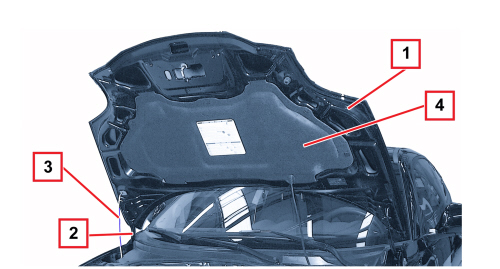
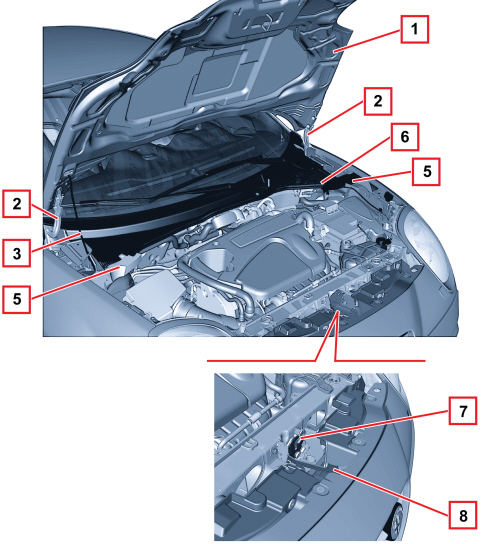
1 - Bonnet lid
2 - Bonnet hinges
3 - Bonnet stay
4 - Sound insulation lining
5 - Anti-noise mountings
6 - Anti-noise seal on bonnet crossmember
7 - Bonnet lock
8 - Release lever